How to Run a Deep Clean Cycle on Maytag Washers: Complete Maintenance Protocol
Running a deep clean cycle on a Maytag washer involves executing the dedicated “Clean Washer with affresh®” maintenance…

Washing Machines represents an appliance engineering and domestic electromechanical repair methodology guiding consumers through diagnostic fault isolation, component replacement, and preventative sanitization resolving error codes, preventing drum bio-film odors, and extending washing machine service life.
Complete maintenance protocol for running high-efficiency deep clean cycles on Maytag washers to eliminate bio-films.
Technical guide explaining the sensor mechanics and water-saving dynamics of washing machine Precise Fill features.
Step-by-step mechanical repair instructions for safely removing and replacing agitator assemblies on Maytag top-loaders.
Modern washing machines are sophisticated electromechanical systems integrating digital microcontroller boards, variable-frequency brushless direct-current (BLDC) inverter motors, optical turbidity sensors, and high-flow centrifugal drain pumps. Maintaining optimal wash quality and equipment reliability requires understanding both mechanical operation and preventative sanitization.
One of the most persistent operational challenges in modern high-efficiency (HE) front-load and top-load washers is the accumulation of bio-film and anaerobic mold within the outer tub cavity and door boot gasket. Because low-temperature wash cycles do not sanitize the drum, residual body oils, undissolved fabric softeners, and lint form a gelatinous residue known as ‘scrud.’ Eliminating this requires periodic 90°C maintenance cycles with sodium percarbonate or chlorinating descalers.
Drainage system failures account for over 50% of residential appliance service calls. Common issues manifest as error codes (such as E1, E2, OE, or 5E), indicating that the drain pump impeller is jammed by stray coins, bra underwires, or accumulated lint. Understanding how to manually drain the machine via the lower emergency filter protects control board triacs from electrical burnout.
| Appliance Symptom / Error | Probable Root Cause | DIY Diagnostic Step | Permanent Resolution Action |
|---|---|---|---|
| Error Code E1 / OE / 5E (No Drain) | Centrifugal drain pump jammed by debris or faulty pump motor | Inspect and clean out lower coin trap / lint filter assembly | Clear foreign obstructions; test pump coil resistance with multimeter (10–20 ohms); replace if burnt |
| Excessive Vibration & Shaking on Spin | Unlevel machine feet, broken suspension rods, or shipping bolts left in | Check bubble level on top lid; push down on opposite corners to detect rocking | Adjust threaded rubber leveling feet; replace worn tub suspension damper springs in top-loaders |
| Musty Mold Odor in Drum & Clothes | Anaerobic bio-film (scrud) buildup between inner and outer wash tub | Inspect rubber door boot folds for black mildew colonies | Run hot 90°C tub clean cycle with 2 cups washing soda or dedicated washer cleaner tablet; leave door open |
| Slow Water Filling or Error 4E / IE | Clogged inlet valve sediment screens or pinched fill hoses | Turn off shutoff valves, disconnect water hoses, inspect mesh filter screens | Clean particulate mineral scale from inlet screens with soft brush; verify 20–100 psi line pressure |
Front-load washers feature an airtight rubber door gasket that traps humidity. Residual detergent scum, fabric softeners, and laundry lint collect in the dark, warm folds, fostering anaerobic bacterial and fungal colonies.
Run a designated tub clean cycle once every 30 wash cycles, or at least once per month. Use hot water (above 60°C) with an oxygenated washing machine descaling tablet to dissolve grease, lime, and bio-film.
First, locate the lower front drain filter (coin trap). Place towels down, unscrew the filter plug, and clear out hair, coins, or debris that may be obstructing the pump impeller blades before suspecting electronic failure.
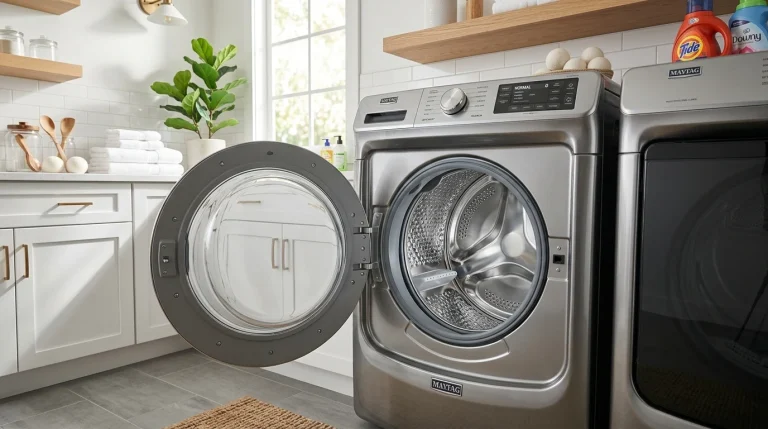
Running a deep clean cycle on a Maytag washer involves executing the dedicated “Clean Washer with affresh®” maintenance…

Precise fill on a washing machine means the machine automatically adjusts the water level to match the size of the load. This feature ensures efficient water usage and optimum cleaning performance. Understanding this feature can help you make the most of your machine.

In the world of fashion, varsity jackets are an iconic piece of clothing. But when it comes to keeping them clean, many are left wondering if they can toss their prized possession into the washing machine. The answer is yes! With the right precautions, you can launder your varsity jacket in the machine. Just remember to use a gentle cycle, cold water, and mild detergent. Be cautious with the dryer though and opt for air-drying to maintain its shape. By following these clothing care tips, your varsity jacket will look as good as new for many seasons to come.

Are you on the hunt for the ultimate washing machine that combines efficiency, durability, and unparalleled performance? Look…

If you’re experiencing issues with your Maytag washing machine’s agitator, don’t worry, we’ve got you covered. Follow our step-by-step guide on how to easily remove the agitator and troubleshoot any problems you may encounter.

Plumbing a washing machine drain pan is essential to prevent water damage. Follow these installation tips to ensure a successful and leak-free setup.

Washing a faux fur rug in the washing machine is easy if you follow these fabric care tips. Use a gentle cycle, cold water, and gentle detergent. Air dry for best results!

Do you dread the smell of your hockey equipment after a tough game? Are you tired of spending…

If your sink gurgles when your washing machine drains, it could be a sign of a plumbing issue. The most common reasons include a clog in the pipes, improper venting, or a problem with the main sewer line. It’s important to address these issues promptly to prevent further damage.

If you’ve encountered the dreaded E1 error on your Whirlpool washing machine, don’t panic. This troubleshooting guide will walk you through the steps to fix the issue and get your machine back up and running in no time.

When deciding where to place your washing machine, consider factors such as proximity to water supply and drainage, ventilation, and ease of access for loading and unloading clothes. Choose a location that is level and sturdy to prevent shaking during the wash cycle.

Yes, you can wash a suit in the washing machine but it is important to follow specific care instructions for the fabric. Be sure to use a gentle cycle, cold water, and a mild detergent to avoid damaging the suit. Always check the label for further guidance.

Washing machine pumps are designed to handle water efficiently and effectively. With the right technology, they can pump water as high as needed to ensure your laundry gets cleaned thoroughly. Understanding how these pumps work can help you maintain your appliance for optimal performance.

A washing machine pump is capable of pumping water up to a maximum height of around 6-8 feet. Understanding the capabilities of your appliance pump can help ensure efficient water drainage and proper functioning of your washing machine.

Velcro is a handy fastening solution found on clothing, bags, and shoes. But what happens when it gets dirty? Can you toss it in the washing machine? The answer is yes! Washing Velcro is easy and effective, simply secure the straps, turn your garment inside out, and use a delicate cycle. Remember to close all hook-and-loop fasteners to avoid tangling. Air-drying is recommended to maintain Velcro’s functionality. With these fabric care tips, your Velcro items will stay clean and ready for use!

Washing hats can be tricky, but what about visors? Can you toss them in the washing machine without damaging them? The answer is yes, but with caution. Most visors made of durable materials like cotton or polyester can be safely machine washed. Remember to remove any detachable parts, place the visor in a mesh laundry bag, and use a gentle cycle with cold water. Air drying is ideal to prevent any shrinkage. However, some delicate or embellished visors may require hand washing. Always check the care label or consider spot cleaning to ensure the longevity of your visor.

If you’re wondering whether it’s safe to wash your Papasan cushion in a washing machine, we’ve got you covered. While it may seem tempting, it’s important to proceed with caution. Read on to discover the best practices for cleaning your Papasan cushion to ensure its longevity and maintain its comfort.

Are you ready to master your GE Profile Washing Machine? In this guide, we will walk you through…

Rust on your washing machine can be unsightly and frustrating. In this article, we’ll explore some effective cleaning hacks to help you remove rust stains and prevent them from coming back.

Can you flush when water is turned off? Discover quick, effective solutions to handle toilet use during water outages and avoid plumbing hassles today.