Is Furniture Safe to Use After Meth Contamination? Health Risks, Testing, and Disposal Rules
✨ This article was AI edited. Editorial responsibility: CrownClassicCleaners.net.
Produced with AI. This article was artificially generated. Editorial responsibility: CrownClassicCleaners.net.
Whether furniture is safe to use after being in a house contaminated with methamphetamine depends strictly on material porosity: soft, porous furnishings such as upholstered sofas, mattresses, foam cushions, and fabric chairs absorb semi-volatile drug vapors deep into their internal batting and cannot be reliably decontaminated, making disposal mandatory. Conversely, non-porous and sealed hard furnishings—such as solid finished hardwood, glass, steel, and sealed laminates—can be safely salvaged if they undergo a multi-stage alkaline surfactant wash and third-party wipe testing confirms surface residues remain below 0.1 µg/100 cm².
Discovering that a purchased property, inherited estate, or rental unit has a history of illicit methamphetamine manufacturing or chronic smoking poses severe health, financial, and logistical dilemmas. When property owners and tenants undertake structural abatement, an urgent question invariably arises: what should be done with the personal belongings and furniture inside the residence? Can a high-end designer sectional or solid oak dining set be washed and moved into a new, clean home, or does retaining contaminated furniture risk poisoning occupants with toxic chemical off-gassing?
The Science of Drug Residue Deposition on Furnishings
When methamphetamine is smoked or chemically synthesized, it generates airborne aerosols and semi-volatile organic vapors. As these vapors migrate throughout a structure, they cool and condense onto every exposed physical object. Unlike superficial household dust, methamphetamine freebase and methamphetamine hydrochloride salts possess lipophilic (fat-loving) and hygroscopic (moisture-absorbing) properties that allow them to penetrate deep into permeable materials.
Every piece of furniture reacts differently depending on its physical construction and porosity:
| Furniture Category | Representative Items | Porosity Rating | Remediation Feasibility | Mandatory Action |
|---|---|---|---|---|
| Porous / Upholstered | Couches, recliners, mattresses, box springs, memory foam pillows | Extremely High | Impossible (<5% recovery) | Permanent disposal / Hazmat destruction |
| Semi-Porous / Unsealed | Unfinished pine, raw cedar chests, particleboard bookcases, wicker | High | Very Poor (<20% recovery) | Disposal recommended; high re-contamination risk |
| Hardwood / Finished Wood | Polyurethane-sealed oak dining tables, lacquered dressers | Low to Moderate | Good (80%–95% clearance) | Multi-stage chemical wash & wipe testing |
| Non-Porous / Inorganic | Glass tabletops, stainless steel frames, chrome barstools, porcelain | Zero | Excellent (>99% clearance) | Alkaline wash, hot rinse & surface wipe test |
| Electronics & Appliances | Televisions, computers, audio receivers with internal cooling fans | Variable (Internal dust) | Moderate | Professional electronic cleaning or disposal |
Why Upholstered Furniture Cannot Be Saved
Many property owners attempt to salvage expensive sofas or recliners using professional carpet extractors, steam cleaners, or ozone generators. Environmental toxicology studies have repeatedly shown that these methods are completely ineffective at neutralizing methamphetamine embedded inside open-cell polyurethane foam:
- The Bellows Effect: Open-cell foam acts like a mechanical sponge. Every time a person sits down on a contaminated cushion, the physical compression acts as a bellows, expelling a concentrated burst of drug vapor and microscopic chemical dust directly into the breathing zone of the occupant.
- Extraction Limitations: Hot water extraction equipment only cleans the outer 1/8-inch of fabric upholstery. It cannot pull chemical salts that have bonded with deep foam cores. Furthermore, injecting hot water and steam into contaminated foam mobilizes the drug salts, spreading them more evenly throughout the internal cushion.
- The Ozone Myth: Ozone gas treatments and “hydroxyl generators” do not break down methamphetamine hydrochloride salts. While ozone may temporarily deodorize the musty or cat-urine smell associated with manufacturing byproducts, the active toxic drug molecule remains fully intact on fibers.
Health Risks of Using Contaminated Furniture
Reusing contaminated furniture in an otherwise clean environment re-introduces severe toxic exposure pathways:
- Direct Transdermal Uptake: Methamphetamine readily penetrates human skin through lipid absorption. Sleeping on a contaminated mattress or resting bare arms on an upholstered sofa results in systemic drug absorption. Symptoms in adults include insomnia, chronic headaches, skin rashes, and heightened heart rate.
- Vulnerability of Children and Toddlers: Infants and young children spend hours crawling on furniture and frequently mouth fabrics. Due to their developing nervous systems, lower metabolic mass, and rapid respiration rates, children exposed to contaminated furniture exhibit acute behavioral changes, respiratory distress, and cognitive deficits.
- Secondary Contamination of Clean Homes: Moving contaminated furniture into a brand-new, uncontaminated residence immediately cross-contaminates clean carpets, drapes, and HVAC ductwork as the furniture off-gasses over months of seasonal heating and cooling cycles.
Protocol for Decontaminating Hard, Non-Porous Furniture
If you possess valuable furniture crafted from solid finished hardwood, metal, glass, or sealed stone, these items can be decontaminated following a rigorous three-phase decontamination process before being introduced into any living space:
Phase 1: Controlled Outdoor / Containment Staging
Never clean contaminated furniture inside an inhabited residence. Move all items outdoors to a paved concrete surface or into an isolated garage under negative air pressure. Don full personal protective equipment (PPE): a half-face respirator with P100 organic vapor cartridges, chemical-resistant nitrile gloves, and safety goggles.
Phase 2: Three-Bucket Alkaline Surfactant Scrubbing
Prepare an industrial cleaning solution using warm water and a specialized alkaline cleaner (such as crystal-cutting surfactants or trisodium phosphate substitute) mixed to a pH of 10.5 to 11.0:
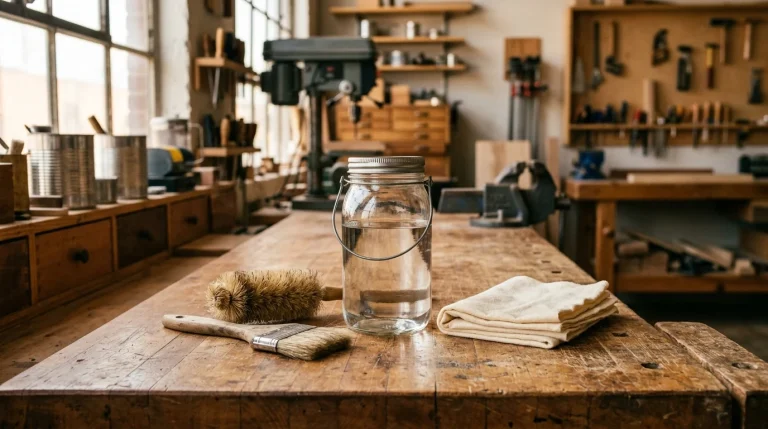
- Dip clean microfiber towels into the solution, wring out until damp, and thoroughly scrub all wood, laminate, and metal framing. Pay particular attention to drawer tracks, the underside of tabletops, back panels, and interior corners where airborne vapor settles.
- Use clean towels for each 15 to 20 square feet of surface area to prevent cross-transferring loosened residues back onto clean surfaces.
- Follow immediately with a clean water rinse towel to remove all chemical detergent film.
Phase 3: Oxidizing Neutralization & Re-finishing
For high-risk wooden items with slight surface wear, mist the surfaces with a stabilized 7% to 10% hydrogen peroxide solution or an EPA-registered quaternary ammonium decontaminant. Allow a 15-minute dwell time, then wipe completely dry. Once dry, examine the finish. If the protective varnish or lacquer was degraded by the chemical wash, apply a fresh coat of polyurethane or high-grade furniture sealant to lock the wood pores.
Clearance Testing: The Only Proof of Safety
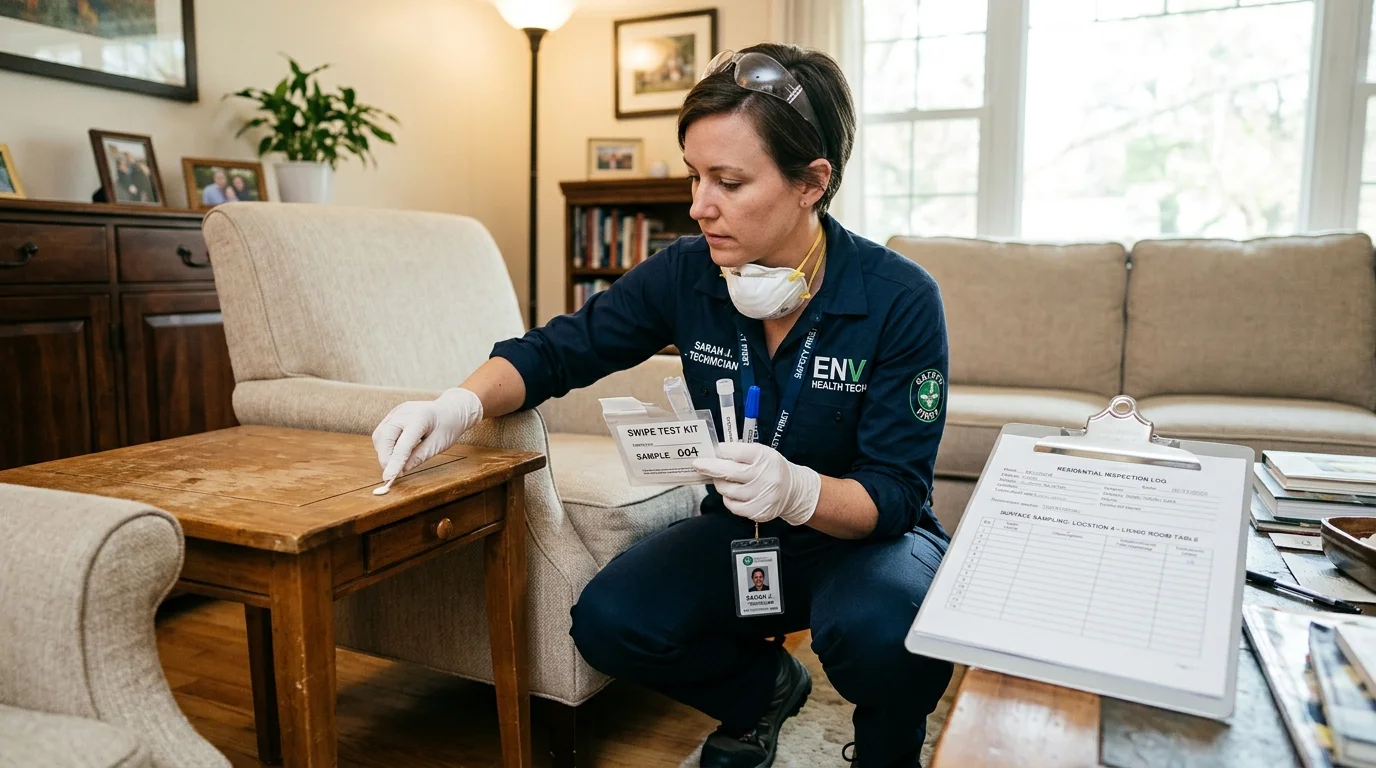
You cannot determine whether furniture is safe by sniffing it or inspecting its color. Before moving any salvaged furniture into an occupied home, perform quantitative surface wipe sampling:
- Obtain certified NIOSH 9111 surface wipe test kits from an accredited environmental laboratory.
- Sample the primary contact zones: armrests, seat edges, tabletop surfaces, and drawer handles using the standard 100 cm² template frame.
- Dispatch the sealed samples to the laboratory for Gas Chromatography-Mass Spectrometry (GC-MS) testing.
- The furniture is certified safe only when laboratory results confirm methamphetamine concentrations below statutory health clearance levels—typically <0.1 µg/100 cm² (or <0.05 µg/100 cm² in jurisdictions with stricter precautionary standards).
Safe Disposal Protocols for Unsalvageable Furniture
When disposing of contaminated mattresses, couches, and porous furnishings, owners must follow ethical and environmental protocols to prevent innocent third parties from salvaging the items:
- Destroy Before Disposal: Cut couch fabric and cushions with a utility knife, slash mattresses down to the internal springs, and dismantle bed frames. This ensures that scavengers, thrifters, or curbside pickers do not carry contaminated items into their homes.
- Labeling Contaminated Waste: Spray-paint “HAZMAT / CONTAMINATED — DO NOT USE” across cushions and mattress toppers before hauling them away.
- Direct Landfill Transport: Transport contaminated furniture directly to a certified regional municipal solid waste landfill or licensed hazardous materials transfer station. Inform facility operators of the origin of the waste.
Frequently Asked Questions
Can leather couches be saved from meth contamination?
Genuine finished leather with an intact topcoat is less permeable than fabric upholstery, but the internal polyurethane cushioning beneath the leather remains a massive contamination trap. Furthermore, vapor penetrates through stitching seams, zipper closures, and perforation holes. Unless the leather piece has negligible contamination and undergoes certified surface and core testing, most industrial hygienists mandate disposal.
Can clothes hanging in closets inside a meth house be washed?
Clothing made from standard washable fabrics (cotton, polyester, denim) that were stored in closed closets can often be decontaminated by washing them through three consecutive hot water wash cycles using heavy-duty laundry detergent and sodium percarbonate (oxygen bleach). However, baby clothing, dry-clean-only silks, leather jackets, and down coats should generally be discarded.
Does landlord or homeowners insurance cover furniture contaminated with meth?
Coverage varies dramatically depending on the specific insurance policy language. Many standard policies contain strict exclusions for illegal acts, pollutant discharge, chemical contamination, and gradual damage. However, some comprehensive policies or specialized landlord protection endorsements include hazmat remediation and contents replacement riders. Consult an insurance claims specialist or legal counsel immediately upon discovering contamination.
Get our latest guides, news, and insights highlighted in your Google Search & AI Overviews.