
How to Clean & Shine Metal Coins at Home: The Metal Care Guide
✨ This article was AI edited. Editorial responsibility: CrownClassicCleaners.net.
Produced with AI. This article was artificially generated. Editorial responsibility: CrownClassicCleaners.net.
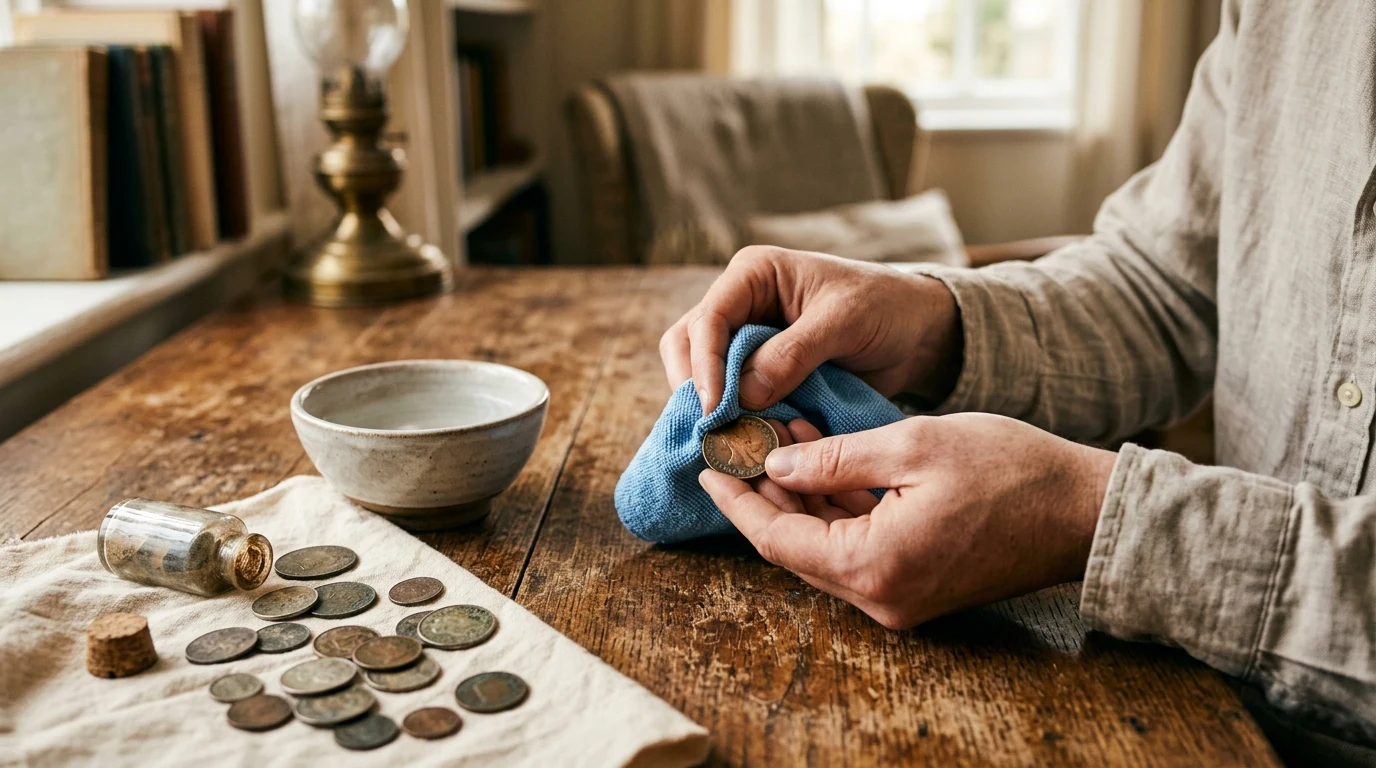
To clean and shine metal coins at home safely, first determine if the coin has numismatic collector value (which should never be abrasively polished), then soak non-numismatic coins in warm distilled water mixed with a few drops of mild, pH-neutral dish soap, gently loosen surface grime using a soft-bristled camel-hair brush, rinse with pure distilled water to eliminate mineral spotting, pat dry with an untreated microfiber cloth, and apply a microscopic layer of conservation-grade microcrystalline wax to preserve luster and prevent oxidative tarnish.
Metal coins, historical medallions, and decorative metallic tokens accumulate stubborn tarnish, oxidized patina, grease, and environmental grime over years of circulation or storage. Whether you have unearthed a pocket of oxidized wheat pennies during metal detecting, inherited a family collection of silver coinage, or want to restore high-gloss luster to decorative brass and copper commemorative tokens, choosing the correct chemical and mechanical cleaning technique is vital. A single improper cleaning attempt using harsh household abrasives can permanently strip surface details, etch microscopic hairline scratches into coin fields, and destroy 90% of a vintage coin’s collectible value in seconds.
The Golden Rule of Numismatics: Collector Value vs. Decorative Shine
Before introducing any cleaning solution or mechanical tool to a metal coin, you must establish its numismatic significance. The coin collecting community and professional grading organizations (such as PCGS and NGC) maintain an uncompromising standard regarding surface originality:
- Numismatic & Rare Coins (NEVER Polish or Harshly Clean): If a coin possesses historical, rare date, mintmark, or numismatic collector value, any chemical dipping, metal polishing paste, or aggressive rubbing constitutes damage. Cleaning strips the coin’s original “mint luster” (the flow lines formed when the metal blank was struck by dies under immense hydraulic pressure) and removes natural toning. Cleaned coins are graded as “Details – Improperly Cleaned,” devastating their auction and resale value. For rare coins, only conservation-grade distilled water soaks or professional third-party conservation services (such as NCS) are permissible.
- Non-Numismatic, Common, or Decorative Coins (Safe to Polish): Common modern pocket change, bulk common-date copper pennies, commemorative tokens, heavily circulated foreign coins, and metal craft pieces have minimal value beyond face metal value. These pieces can be cleaned, brightened, and polished to a brilliant mirror shine using home metal care methods.
Understanding Coin Metallurgy: Chemical Reactions by Metal Type
Different metals and alloys react uniquely to acids, bases, and mechanical agitation. Matching the cleaning chemistry to the coin’s exact metallic composition prevents irreversible etching and surface discoloration:
| Metal / Alloy | Typical Coin Examples | Ideal Cleaning Agent | Agents to Strictly Avoid |
|---|---|---|---|
| Copper & Bronze | Pre-1982 US Pennies, British Farthings | Distilled water + Dawn; Salt & Lemon Juice (decorative only) | Ammonia, coarse baking soda paste, wire brushes |
| Silver (.900 / .999) | Pre-1965 US Dimes, Quarters, Halves, Morgan Dollars | Warm distilled soapy bath; Aluminum foil + baking soda bath | Liquid chemical dips (acid thiourea), steel wool |
| Cupronickel (75% Cu, 25% Ni) | Modern Jefferson Nickels, clad dimes and quarters | Dilute isopropyl alcohol soak; ultrasonic water bath | Concentrated hydrochloric or muriatic acids |
| Brass & Golden Dollar Alloy | Sacagawea Dollars, Presidential Dollars, foreign tokens | Dilute citric acid rinse or mild jewelry shine cloth | Bleach, abrasive scouring sponges |
| Zinc (Modern Pennies 1982–Present) | Modern copper-plated zinc Lincoln cents | Gentle warm water wipe only | Any strong acid; vinegar will dissolve the zinc core |
Method 1: The Safe Conservation Wash (Recommended for All Coins)
This conservative cleaning method removes dirt, skin oils, and loose particulate debris without inducing chemical erosion or scratching the underlying metal fields:
Step 1: The Distilled Water Bath
Tap water contains dissolved minerals, fluoride, and chlorine that cause white spots and micro-corrosion. Pour 6 ounces of warm distilled water into a clean plastic or ceramic bowl (avoid metal bowls to prevent galvanic interaction). Add 3 drops of mild, fragrance-free, dye-free dish soap. Submerge your coins individually and allow them to soak for 20 to 30 minutes to soften stubborn soil.
Step 2: Gentle Mechanical Loosening
Hold the coin strictly by its outer edges (rim) between your thumb and index finger. Never press your thumb flat against the coin face (obverse or reverse), as fingerprints transfer acidic oils. Using an ultra-soft camel-hair artist brush or a freshly sanitized extra-soft baby toothbrush, gently stroke across the surface with zero downward pressure. Let the bristle tips carry away the loosened soil.
Step 3: Acetone or Alcohol Degreasing
If sticky tape residue, green PVC plasticizer film from cheap album holders, or heavy oil deposits linger on the coin, submerge it in 100% pure technical-grade acetone (not commercial nail polish remover, which contains water and fragrance oils) in a well-ventilated area inside a glass dish. Pure acetone is chemically neutral to coin metals (copper, silver, gold) but instantly dissolves organic polymers, grease, and PVC slime without harming the metal patina.
Step 4: Distilled Rinse and Pat Drying
Rinse the coin thoroughly with fresh distilled water. Lay the coin on a clean, dry lint-free microfiber towel. Gently fold the towel over and pat the coin dry. Never rub or drag the cloth across the coin face, as microscopic dust particles can cause minute hairline scratch tracks.
Method 2: Restoring High Shine on Common Copper & Brass (Decorative Only)
If you want to achieve a brilliant, sparkling shine on common-date copper pennies, decorative brass tokens, or metal jewelry components, use this electrochemical reduction technique:
The Acetic Acid & Sodium Chloride Brightening Bath
- In a non-metallic cup, mix 1/4 cup of distilled white vinegar (5% acetic acid) with 1 teaspoon of non-iodized table salt (sodium chloride). Stir until the salt crystals are completely dissolved.
- Place your tarnished copper or brass coins into the solution. Within 10 to 30 seconds, the mild acid dissolves the dark copper oxide (CuO) layer, while chloride ions accelerate the reduction process, restoring bright, gleaming pinkish-orange metallic copper.
- Immediately transfer the coins into a separate neutralizing bath composed of 2 cups of warm water mixed with 2 tablespoons of baking soda. This alkaline bath immediately stops the acid reaction. Failure to neutralize will cause copper coins to develop unsightly powdery green verdigris (copper carbonate) within hours.
- Rinse extensively with distilled water and dry completely.
Method 3: Restoring Luster to Silver Coins via Electrolytic Reduction
Silver coins tarnish because airborne sulfur compounds react with surface silver to form black silver sulfide (Ag2S). Rather than scrubbing away the silver layer with abrasive silver polish pastes, electrolytic reduction chemically transfers the sulfur atoms to aluminum foil:
- Line the bottom of a shallow glass baking dish with clean aluminum foil (shiny side facing upward).
- Place your silver coins flat onto the foil, ensuring direct metal-to-metal contact between each coin and the aluminum.
- Boil 2 cups of distilled water and dissolve 2 tablespoons of baking soda and 1 tablespoon of salt into the boiling water.
- Pour the hot mixture over the coins until they are completely submerged. You will notice faint effervescence and a subtle sulfurous aroma. The aluminum possesses a higher chemical affinity for sulfur than silver; an electrochemical cell forms, transferring sulfur from the silver sulfide to the aluminum, leaving pure, gleaming silver behind.
- After 3 to 5 minutes, carefully extract the coins with plastic tongs, rinse thoroughly in distilled water, and pat dry with microfiber.
Long-Term Preservation: Preventing Re-Tarnishing
Freshly cleaned and shined metal surfaces are highly vulnerable to rapid atmospheric oxidation. Protect your restored coins with museum-grade preservation techniques:
- Microcrystalline Wax (Renaissance Wax): Used by the British Museum and major historical institutions. Apply an infinitesimal dab of microcrystalline wax to the coin surface using a cotton swab, buff lightly with a clean microfiber cloth, and allow it to cure. This creates an airtight, acid-free, moisture-proof barrier that halts oxidation for decades without degrading the coin.
- Archival 2×2 Coin Flips & Airtite Capsules: Store cleaned coins in Mylar-lined cardboard flips or inert acrylic capsules. Never use flexible soft vinyl flips containing polyvinyl chloride (PVC), as PVC off-gasses hydrochloric acid that eats into coin surfaces and leaves sticky green chemical slime.
- Silica Gel Desiccants: Place food-grade silica gel canisters inside your coin storage cabinets or safety deposit boxes to maintain relative humidity below 35%.
Frequently Asked Questions
Does cleaning a coin devalue it?
Yes, for collectible, vintage, or numismatic coins. Cleaning removes the original mint luster and natural toning, permanently scarring the microscopic surface fields. Professional grading services will designate the coin as cleaned, which typically reduces its market valuation by 50% to 90%. Only clean coins that have zero numismatic premium over face or scrap metal value.
Can I use baking soda and water paste to polish coins?
Baking soda paste has a Mohs hardness around 2.5, which is abrasive enough to leave thousands of fine circular scratches (whizzing/polishing lines) on soft metals like silver, gold, and copper. While it will make common pennies look shiny, it destroys coin collectibility. If using baking soda on silver, always use the dissolved liquid electrolytic method with aluminum foil rather than physical rubbing.
Can I clean coins in an ultrasonic cleaner?
Ultrasonic jewelry cleaners filled with distilled water and a drop of neutral surfactant are safe and effective for dislodging loose dirt from encrusted dug coins without mechanical abrasion. However, do not use commercial jewelry cleaning chemicals in the tank, and avoid placing fragile, cracked, or high-relief collectible coins in high-frequency ultrasonic baths.
What is the safest way to dry coins after washing?
Rinse the coin with pure distilled water to avoid mineral spots, place it onto a clean lint-free microfiber cloth or soft cotton towel, and gently pat the moisture off. Never rub, wipe, or blow-dry with high-heat air guns, which can oxidize sensitive copper alloys.
Get our latest guides, news, and insights highlighted in your Google Search & AI Overviews.


