
Meth and MSM Residue: Identification, Safety Risks, and Remediation Protocol
✨ This article was AI edited. Editorial responsibility: CrownClassicCleaners.net.
Produced with AI. This article was artificially generated. Editorial responsibility: CrownClassicCleaners.net.
To remediate meth and MSM residue on household surfaces, isolate the affected zone with negative air pressure, remove and discard porous items such as carpets and HVAC filters, apply a specialized three-stage wash using an industrial alkaline surfactant detergent followed by an oxidizing foaming agent (such as hydrogen peroxide or quaternary ammonium compound) to break down the lipophilic drug matrix and crystalline organosulfur bond, scrub with mechanical agitation, rinse thoroughly with warm water, and verify surface levels fall below 0.1 µg/100 cm² via certified laboratory wipe sampling.
When residential or commercial properties are exposed to methamphetamine contamination—whether through illicit manufacturing (clandestine drug laboratories) or chronic smoking and vaporization—the resulting chemical residue forms a stubborn, semi-volatile film across interior surfaces. In contemporary drug seizures and structural assessments, methamphetamine is frequently co-mingled with methylsulfonylmethane (MSM). MSM is an over-the-counter dietary supplement and organosulfur compound commonly utilized as a cutting agent due to its melting point and crystalline appearance closely mimicking pure methamphetamine hydrochloride. When vaporized together, both compounds condense onto walls, ductwork, ceilings, and flooring, leaving persistent hazardous residues that present severe health liabilities if left untreated.
Understanding Methamphetamine and MSM Residue Chemistry
Effective environmental decontamination requires understanding how methamphetamine and methylsulfonylmethane behave at a molecular level. While MSM itself is non-toxic as a dietary supplement, in the context of clandestine property contamination, it serves as a physical carrier that encapsulates toxic meth molecules within a crystalline matrix:
| Property / Metric | Methamphetamine Hydrochloride (C10H15N·HCl) | Methylsulfonylmethane / MSM ((CH3)2SO2) |
|---|---|---|
| Chemical Classification | Synthetic sympathomimetic amine / alkaloid salt | Organosulfur sulfone compound |
| Boiling / Sublimation Point | Sublimes readily upon heating; bp ~215°C | Melting point 109°C; bp 238°C; sublimes rapidly |
| Physical Residue Form | Sticky, yellow-brown to amber tacky resin film | White crystalline powder, needle-like lattice |
| Solubility Profile | Highly water soluble; lipophilic in freebase form | Soluble in water, ethanol, and polar solvents |
| Toxicity & Exposure Hazard | Severe neurotoxin; transdermal & inhalation risk | Low acute toxicity; acts as particulate irritant |
| Regulatory Clearance Threshold | 0.05 to 1.5 µg/100 cm² (varies by jurisdiction; 0.1 standard) | Not regulated as a controlled toxin; marker compound |
Because MSM recrystallizes rapidly when vapor cools, it often traps methamphetamine vapor within microcrystalline needles on structural drywall, trim paint, laminate countertops, and window glass. Standard household cleaning sprays (such as generic glass cleaners or bleach) often fail because bleach does not chemically neutralize methamphetamine—instead, chlorine bleach reacts with organic amines to form volatile chloramines without lowering surface methamphetamine concentrations to safe regulatory thresholds.
Health Risks of Chronic Surface Exposure
Methamphetamine residue does not simply evaporate or dissipate with fresh air. Research conducted by national environmental health institutes confirms that surface-bound methamphetamine remains biologically active for months or even years. Occupants living in contaminated properties absorb the substance through multiple physiological pathways:
- Dermal Absorption: Methamphetamine freebase readily penetrates human skin upon touching contaminated walls, door handles, light switches, and banisters. Young children and infants crawling on floors are particularly susceptible due to high surface-area-to-body-mass ratios.
- Secondary Inhalation: Changes in room temperature and humidity cause the semi-volatile residue to off-gas back into the breathing zone, leading to chronic respiratory irritation, persistent coughs, and exacerbated asthma.
- Systemic Neurological Effects: Chronic low-dose exposure has been clinically linked to sleep disturbances, unexplained headaches, heightened anxiety, tachycardia, skin rashes, and cognitive impairments in non-using occupants.
Diagnostic Testing: Screening vs. Laboratory Verification
Before initiating any cleaning protocol, objective surface testing is mandatory to establish baseline contamination levels and determine whether the structure requires professional hazmat abatement or localized surface remediation:
1. Rapid Colorimetric Lateral Flow Immunoassay Swabs
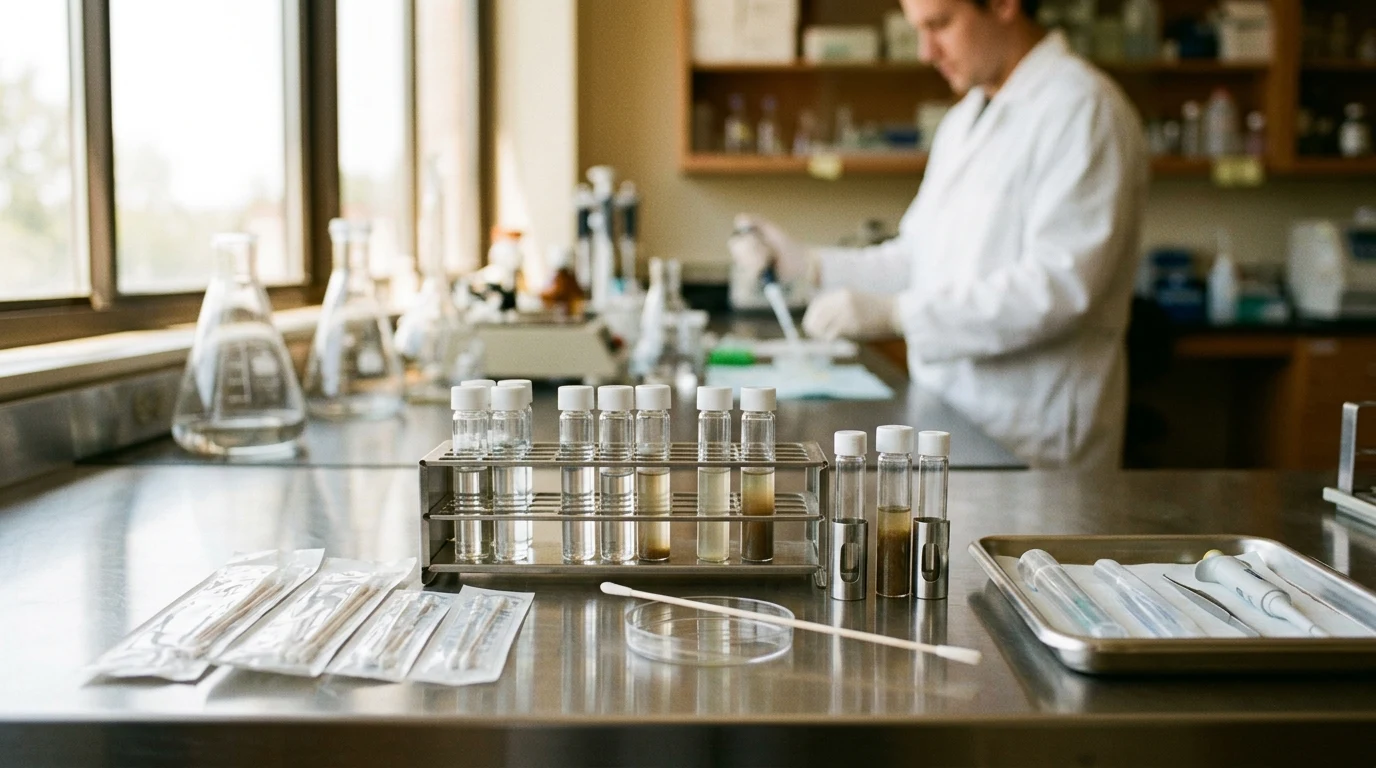
Instant wipe test kits utilize lateral flow immunoassay technology (similar to medical test strips). These screening tools detect methamphetamine residue at predetermined sensitivity thresholds (typically 0.1 µg/100 cm² or 0.5 µg/100 cm²). While excellent for rapid real-time diagnostic mapping across walls, cabinetry, and HVAC returns, they do not provide certified quantitative data required for formal legal clearance.
2. Certified NIOSH 9111 Wipe Sampling & GC-MS Analysis
The gold standard for legal and health clearance follows NIOSH Method 9111. A certified technician utilizes 10 cm x 10 cm template frames and pre-wetted analytical gauze pads (saturated with isopropanol or methanol). Samples are collected in a precise concentric cross-hatch pattern, sealed in glass vials, and dispatched to an accredited laboratory for Gas Chromatography-Mass Spectrometry (GC-MS) analysis. Clearance standards vary by state:
- Conservative Standards (e.g., California, Washington, Minnesota): 0.1 µg per 100 cm² (strict zero-tolerance safety margin).
- Moderate Standards (e.g., Utah, Colorado, Indiana): 0.2 to 0.5 µg per 100 cm².
- High Thresholds: 1.5 µg per 100 cm² (rare, older legacy guidelines).
Personal Protective Equipment (PPE) Requirements
Remediation releases aerosolized dust and dissolved chemical salts. Never attempt decontamination without full personal protection:
- Respiratory Protection: Half-face or full-face elastomeric respirator fitted with combination P100 organic vapor/acid gas cartridges (NIOSH approved).
- Dermal Barrier: Double-layered chemical-resistant nitrile or butyl gloves. Outer gloves should be taped to suit wrists.
- Body Covering: Disposable microporous polyethylene coveralls (Tyvek suit) with integrated hood and boot covers.
- Eye Protection: Indirect-vent splash goggles (if using a half-face respirator).
Comprehensive Step-by-Step Remediation Protocol
Phase 1: Containment and Material Triage
Isolate the contaminated work area from unaffected zones using 6-mil polyethylene plastic sheeting taped across doorways with heavy-duty painters tape. Set up negative air pressure using a HEPA-filtered air scrubber venting directly to the exterior. All porous and fibrous materials that have absorbed vapor—including wall-to-wall carpeting, carpet padding, fabric draperies, exposed fiberglass insulation, and acoustic ceiling tiles—cannot be reliably washed to non-detectable levels. These materials must be double-bagged in 6-mil waste bags and disposed of according to local environmental hazardous waste guidelines.
Phase 2: High-Efficiency Particulate Air (HEPA) Vacuuming
MSM crystalline residues often settle as microscopic surface dust. Thoroughly vacuum all dry ceilings, walls, subfloors, and millwork using an industrial vacuum equipped with a certified HEPA filtration system (99.97% efficiency at 0.3 microns). Move the vacuum head slowly in overlapping passes. Never use a standard household vacuum without true sealed HEPA filtration, as the exhaust motor will re-aerosolize fine meth and MSM crystals throughout the property.
Phase 3: The Three-Bucket Chemical Wash System
The chemical decontamination wash relies on surfactant dissolution and mechanical emulsification. Prepare three dedicated 5-gallon buckets:
- Bucket 1 (Cleaning Solution): Warm water blended with an industrial alkaline surfactant detergent (such as trisodium phosphate alternative or dedicated crystal-dissolving emulsifiers) at an active pH of 10.0 to 11.5.
- Bucket 2 (Rinse Basin 1): Clean warm water for initial towel rinsing.
- Bucket 3 (Clean Water Final Rinse): Fresh distilled or clean warm tap water.
Work methodically from the highest point in the room (ceiling) downward toward the floor. Fold microfiber cleaning towels into quarters, creating eight fresh cleaning faces:
- Saturate a microfiber towel in Bucket 1, wring until damp, and scrub a 2-foot by 2-foot grid using firm pressure in overlapping circular motions to agitate the MSM crystal structure.
- Flip the towel face and wipe linearly to lift the suspended methamphetamine amine salts.
- Rinse the towel in Bucket 2 to dump soil, then dunk in Bucket 3 before reapplying cleaning solution. Never re-dip a contaminated towel directly into Bucket 1.
- Replace microfiber towels frequently. A single towel should cover no more than 20 to 30 square feet of surface before being discarded.
Phase 4: Advanced Oxidation / Quaternary Decontamination
Following surfactant washing, stubborn crystalline residues require chemical cleavage. Spray the surfaces with an EPA-registered broad-spectrum chemical decontaminant based on activated hydrogen peroxide (7% to 10%) or dual-quaternary ammonium surfactant blends. The oxidation reaction cleaves the amine functional groups, rendering the residues water-soluble and non-toxic. Allow the foam or mist to maintain contact for a minimum dwell time of 15 to 20 minutes before performing a final wipedown with clean microfiber towels.
Phase 5: Exhaustive Rinsing and De-humidification
Rinse all washed surfaces twice with clean, hot water. Residual surfactant film can leave a sticky residue that traps subsequent airborne dust. Run commercial refrigerant dehumidifiers and air scrubbers continuously for 48 hours to dry subfloors and drywall completely, preventing microbial mold growth.
HVAC Decontamination & Ductwork Sanitation
The forced-air heating, ventilation, and air conditioning (HVAC) system functions as a distribution hub for meth and MSM vapors. Turn off the system immediately upon discovering contamination. Replace all furnace and return filters with MERV-13 or HEPA media. Hard sheet-metal ductwork must be mechanically brushed and washed with surfactant solution; flexible plastic or insulated fiberglass ducting cannot be decontaminated and must be completely removed and replaced.
Can You Just Paint Over Meth and MSM Residue?
A widespread and dangerous myth suggests that coating contaminated walls with heavy oil-based primers, shellac, or encapsulating paints will safely seal methamphetamine residue. Independent studies conducted by the National Institute of Standards and Technology (NIST) have disproven this practice. Methamphetamine hydrochloride molecules are semi-volatile and miscible in paint solvents. Within weeks to months, the chemical migrates through paint films via capillary action and diffusion, off-gassing into the ambient living space. Encapsulation is only acceptable as an optional secondary finish after chemical surface washing has already verified compliance below clearance thresholds.
Post-Remediation Clearance Protocols
Once decontamination and drying are complete, wait a minimum of 24 hours to allow surfaces to stabilize. Hire an independent, third-party certified industrial hygienist (CIH) who was not involved in the cleaning work to perform post-abatement wipe tests according to NIOSH 9111. Testing must sample high-risk deposition zones: ceiling returns, wall areas directly above light fixtures, interior door casings, and kitchen cabinets. The property is legally and medically clear only when all test samples report concentrations below the local statutory threshold (typically <0.1 µg/100 cm²).
Frequently Asked Questions
What is the difference between meth and MSM?
Methamphetamine is an illegal central nervous system stimulant, whereas MSM (methylsulfonylmethane) is a legal sulfur-containing dietary supplement. In illicit substance supply chains, MSM is the primary cutting agent because its physical crystal shape, color, and boiling characteristics are almost identical to methamphetamine. When smoked or cooked, both chemicals vaporize simultaneously and settle together onto structural surfaces.
Does bleach destroy meth residue on walls?
No. Household bleach (sodium hypochlorite) does not neutralize or break down methamphetamine molecules. Bleach can alter the surface appearance or oxidize cosmetic stains, but lab tests prove that surface wipe tests remain positive for methamphetamine after bleach applications. Furthermore, mixing bleach with amine chemical residues produces hazardous chloramine gas.
How long does meth and MSM residue last on a property?
Methamphetamine residue does not naturally break down under normal indoor environmental conditions. Unless chemically broken down with alkaline surfactants and oxidizers or physically removed, methamphetamine residue can remain active on drywall, wood, and concrete for well over a decade, posing a continuous transdermal absorption hazard.
How do I know if a property is contaminated with meth?
Visual signs often include amber, yellow, or reddish chemical drip marks on walls and ceilings, unusual chemical odors reminiscent of cat urine, ammonia, or burnt plastic, and white crystalline films along window sills. However, smoked methamphetamine frequently leaves zero visible discoloration or lingering odor, making certified chemical surface wipe testing the only definitive diagnostic method.
Get our latest guides, news, and insights highlighted in your Google Search & AI Overviews.


