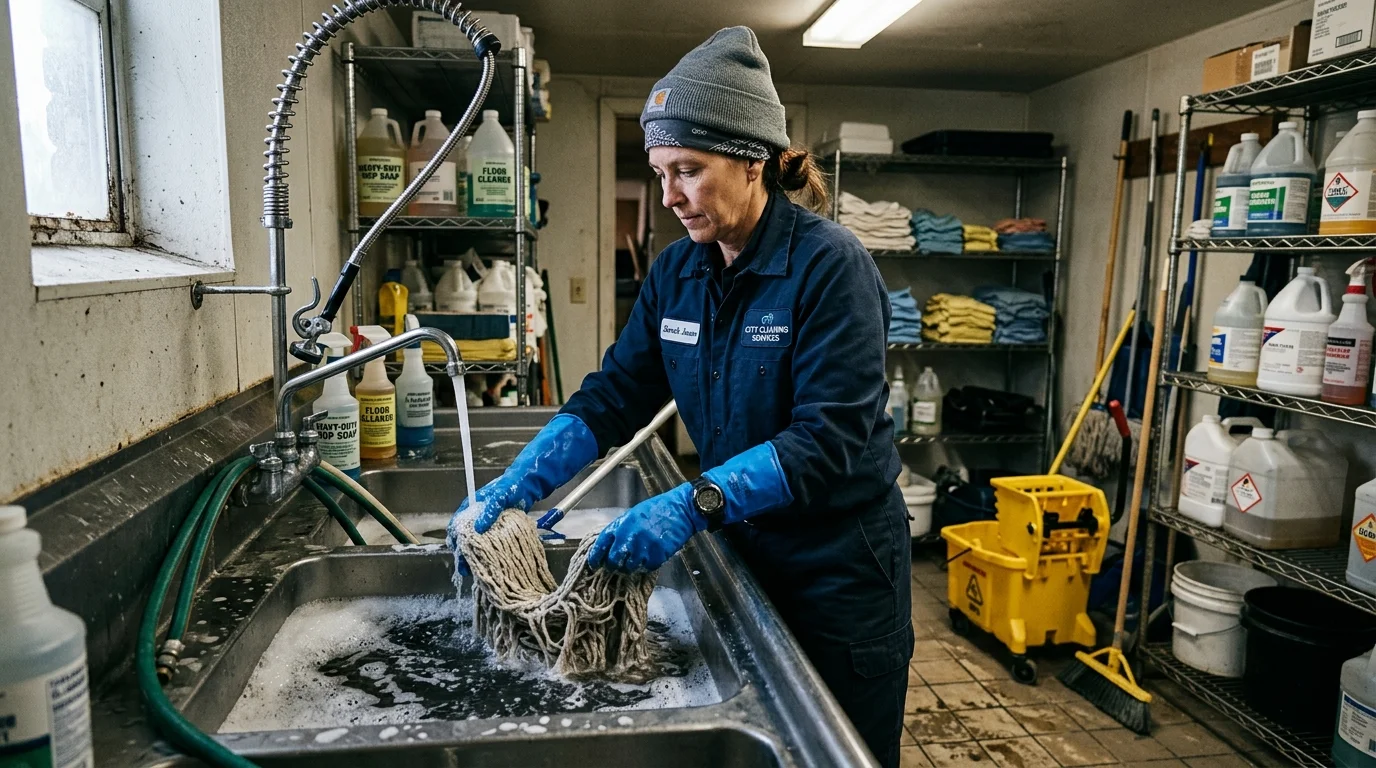
What Detergent to Use on a Solvent-Soaked Mop: Emulsifiers and Fire Safety
✨ This article was AI edited. Editorial responsibility: CrownClassicCleaners.net.
Produced with AI. This article was artificially generated. Editorial responsibility: CrownClassicCleaners.net.
To wash a mop soaked in solvent safely, use a heavy-duty industrial degreaser detergent containing non-ionic surfactants (such as linear alcohol ethoxylates) or a concentrated d-Limonene citrus terpene cleaner in a dedicated two-stage utility sink or bucket soak; never put a solvent-soaked mop into an electric washing machine or tumble dryer, as volatile hydrocarbon vapors accumulate inside closed appliance drums and ignite from electrical motor arcing or heating elements, creating catastrophic explosion hazards.
In commercial facilities, automotive workshops, industrial painting bays, and residential renovation projects, string and loop mops are frequently pressed into service to clean up spills of mineral spirits, turpentine, paint thinner, acetone, polyurethane floor finishes, or petroleum degreasers. Once a heavy cotton or microfiber mop head absorbs organic solvents, cleaning staff face a dangerous dilemma: what type of detergent can break down these non-polar chemical oils, and how can the mop be laundered without triggering a workplace fire or poisoning municipal sewer drains? Applying ordinary laundry soap and throwing the mop head into a laundry machine is one of the most hazardous mistakes in facility maintenance.
The Chemistry of Solvent Emulsification
Standard household laundry detergents are engineered to remove polar soils—such as food stains, sweat, proteins, and light surface dust—utilizing anionic surfactants with a high Hydrophilic-Lipophilic Balance (HLB). However, industrial solvents (such as aliphatic hydrocarbons, Stoddard solvent, xylene, and naphtha) are purely non-polar and hydrophobic. When mixed with ordinary laundry detergent and water, the solvent resists emulsification, floating to the surface of the wash water and leaving heavy chemical resins trapped within the mop’s inner yarn fibers.
To break the bond between cotton fibers and organic solvents, you must deploy specialized chemical surfactant classes:
| Detergent Category | Representative Formulations | Active Surfactant Chemistry | Solvent Emulsification Rating | Safety & Application Guidelines |
|---|---|---|---|---|
| Industrial Non-Ionic Degreasers | Simple Green Pro HD, Dawn Professional Heavy Duty Degreaser | Alcohol ethoxylates, amine oxides (HLB 11–13) | Superior (>95% oil removal) | Breaks hydrocarbon chains; safe on cotton and synthetic blends; low foaming |
| Citrus Terpene Cleaners | d-Limonene concentrated cleaners, Orange Sol Industrial | Cold-pressed citrus terpenes + wetting agents | Superior (Solvent-on-solvent action) | Dissolves stubborn adhesive and lacquer resins; pleasant natural citrus aroma |
| Alkaline Builder Detergents | Sodium metasilicate builders, commercial floor strippers | Alkaline silicates + potassium hydroxide (pH 11.0–12.0) | Excellent on oxidized drying oils | Requires heavy chemical-resistant gloves; can degrade natural cotton fibers if soaked >2 hours |
| Standard Consumer Laundry Soap | Tide, Gain, Persil retail liquid pods | Sodium dodecylbenzenesulfonate (Anionic) | Ineffective (<20% oil removal) | Leaves flammable petroleum hydrocarbon residues behind in fibers; creates fire hazard |
The Severe Explosion Hazard of Laundry Machines
Under no circumstances should a mop head wet with flammable solvents be placed directly into a home or commercial electric washing machine or tumble clothes dryer. The National Fire Protection Association (NFPA) documents dozens of commercial facility fires each year caused by solvent-soaked textiles:
- The Washer Explosion Mechanism: As the washing machine agitates in warm water, it accelerates the evaporation rate of volatile solvents like paint thinner, mineral spirits, or acetone. The motor, timer relays, and electronic lid lock solenoids generate continuous electrical arcing during cycle switching. The accumulation of concentrated solvent vapors inside the closed drum creates a stoichiometric fuel-air mixture that detonates from an electrical spark.
- The Tumble Dryer Fire: Even if a mop has been washed once, residual petroleum hydrocarbons trapped in the core of thick cotton mop loops will vaporize under the 140°F to 160°F (60°C to 71°C) heat of a commercial dryer. The dryer heating element or gas burner flame will instantly ignite the vapors, triggering a rapid structural fire.
- Spontaneous Combustion in Laundry Bins: Piling damp, solvent-soiled mops in a plastic hamper or laundry cart creates an exothermic oxidation reaction. Without ventilation, internal temperatures can exceed 450°F (232°C), bursting into spontaneous flame without any external spark.
The Two-Stage Bucket Washing Protocol
To safely clean and salvage a reusable commercial mop head that has been soaked in petroleum solvents, execute this manual bucket decontamination protocol in a well-ventilated outdoor area or janitorial room with mechanical exhaust:
Phase 1: Mechanical Squeeze and Solvent Dilution
- Don 15-mil chemical-resistant nitrile or butyl gloves, splash goggles, and a protective apron.
- Take the mop outdoors or into a dedicated utility basin. Wring out as much raw solvent as possible into a dedicated metal hazardous waste container using a manual wringer bucket. Never discharge raw solvent into sanitary sewer sinks.
- Fill a heavy-duty 5-gallon polyethylene or galvanized steel bucket with 3 gallons of warm water (115°F / 46°C).
- Add 8 to 12 ounces of concentrated industrial non-ionic degreaser (or a 100% d-Limonene citrus cleaner). Agitate the water to create a uniform emulsifying bath.
Phase 2: Submersion and Agitation
- Submerge the mop head into the chemical solution. Plunge the mop up and down vigorously for 3 to 5 minutes to force the surfactant-rich water deep into the core of the yarn strands.
- Allow the mop head to soak undisturbed for 30 to 45 minutes. The non-ionic surfactants will encapsulate the non-polar hydrocarbon droplets, turning the wash bath into a cloudy, milky emulsion.
- Plunge and squeeze the mop head through a second round of manual agitation to lift the dislodged resins.
Phase 3: Deep Fresh-Water Rinsing
- Wring the mop head thoroughly in the wringer mechanism.
- Transfer the mop to a second bucket filled with clean, warm water containing 2 ounces of distilled white vinegar. The mild acetic acid neutralizes alkaline detergent builders and strips away any remaining soapy film.
- Rinse the mop head until the rinse runoff water is crystal clear and free of petroleum odors or visible oil sheens.
Drying and Disposal: Preventing Spontaneous Combustion
Once washed, the mop must undergo a strict outdoor air-drying procedure:
- Outdoor Flat Drying: Hang the mop head by its headband clamp on an outdoor clothesline or lay the yarn strands spread out in a single layer across a non-combustible concrete pad in direct sunlight.
- Air Drying Duration: Allow the mop to dry completely for a minimum of 24 hours. The natural airflow and ultraviolet sunlight dissipate any lingering trace hydrocarbon molecules.
- Storage Verification: Sniff the dry yarn before placing the mop back into a storage closet. If any petroleum or solvent odor persists, repeat the emulsifying wash. Never store a mop with detectable chemical odor in an unventilated custodial closet.
When Should You Discard the Mop Head?
While high-grade synthetic microfiber or looped-end cotton mops can often be salvaged after light solvent exposure, certain contamination scenarios warrant immediate disposal:
- Cured Resins & Adhesives: If the mop was used to clean two-part epoxy floor finishes, uncured polyurethane varnish, or contact cement, the resin will polymerize and permanently harden the fibers. No detergent can dissolve cured polyurethane without destroying the yarn.
- Heavy Motor Oil or Grease Saturation: A standard 24-ounce cotton mop head costs between \$8 and \$15 USD. Spending \$20 worth of specialized degreasing chemicals and 45 minutes of labor to salvage a heavily soiled, threadbare mop is financially irrational compared to installing a fresh replacement head.
- Disposal Protocol: Spread the discarded mop head flat outdoors on concrete until completely dry and stiff. Once fully cured and free of volatile vapors, wrap it in heavy plastic and dispose of it with municipal solid waste according to local environmental regulations.
Frequently Asked Questions
Can I wash a solvent-soaked mop in a commercial laundromat machine?
No. Commercial laundromat owners strictly prohibit textiles contaminated with paint thinner, gasoline, motor oil, or mineral spirits. Introducing solvent-soaked mops into commercial front-loaders risks chemical explosions, ruins subsequent customers’ clothing with oil transfer, and can incur thousands of dollars in liability for damages.
Does Dawn dish soap work to clean solvent from a mop?
Yes. Original blue Dawn dish soap is formulated with high concentrations of non-ionic and specialized anionic surfactants designed to strip non-polar animal fats and crude petroleum oils (the same formulation deployed during environmental oil spill wildlife rescues). In a manual bucket wash, Dawn is an effective, accessible degreaser for light solvent contamination.
Can I pour the dirty solvent wash water down the drain?
Pre-rinse water containing concentrated solvents should never be poured down residential or storm drains. However, the emulsified wash water resulting from the secondary degreasing soak—where the solvent has been fully broken down and dispersed in soapy water—is generally accepted by municipal sanitary sewer systems equipped with industrial wastewater treatment, provided no free-floating oil slick is present. Check local municipal wastewater discharge bylaws.
Get our latest guides, news, and insights highlighted in your Google Search & AI Overviews.