How to Safely Remove Sticky Window Adhesive with Spirits & Solvents
✨ This article was AI edited. Editorial responsibility: CrownClassicCleaners.net.
Produced with AI. This article was artificially generated. Editorial responsibility: CrownClassicCleaners.net.
Removing sticky residue from windows with spirits involves applying mineral spirits (petroleum distillates) or methylated spirits (denatured alcohol) to dissolve synthetic adhesives, tape residue, and baked-on stickers without scratching glass. The solvent breaks down polymer cross-links, enabling easy wipe-away removal with a microfiber cloth and razor scraper.
Sticky residue on window glass—whether caused by masking tape, price stickers, holiday decals, duct tape, packing tape, or architectural window films—presents a stubborn cleaning challenge. When exposed to solar ultraviolet (UV) radiation and fluctuating ambient temperatures, synthetic pressure-sensitive adhesives (PSAs) oxidize, cross-link, and bake into an unyielding, gummy layer. Attempting to scrub these residues with abrasive scouring pads or generic glass sprays usually smears the glue across the pane, creating cloudy hazing and risking permanent scratches on the glass surface.
In this technical guide from the professional cleaning specialists at Crown Classic Cleaners, we explain how to safely deploy mineral spirits, methylated spirits, and specialized solvent chemistries to completely eliminate sticky window adhesive while protecting glass, window seals, and framing.
Solvent Chemistry: Mineral Spirits vs. Methylated Spirits vs. Acetone
Understanding which solvent to select depends on the chemical nature of the adhesive polymer. Using the wrong solvent can spread sticky polymers across the glass or permanently damage neighboring architectural materials.
| Solvent Type | Chemical Base | Target Adhesives | Safety & Substrate Warnings |
|---|---|---|---|
| Mineral Spirits (White Spirit) | Aliphatic petroleum hydrocarbons (non-polar) | Duct tape, packing tape, asphalt/tar, petroleum-based mastics | Leaves light oily film; safe on glass and cured paint; flammable |
| Methylated Spirits (Denatured Alcohol) | Ethanol with methanol denaturant (polar) | Latex glue, water-based label adhesives, sticker gum, tree sap | Evaporates residue-free; do not use on fresh acrylic paints or tinted film |
| Acetone | Dimethyl ketone (fast-acting organic solvent) | Superglue (cyanoacrylate), silicone sealant film, dried epoxy | Extreme Caution: Melts uPVC frames, rubber window gaskets, and tinted films |
| d-Limonene (Citrus Cleaner) | Natural terpene solvent | General sticker gum, price tags, vinyl decal residue | Slow dwell time; pleasant scent; safe for indoor residential use |
Step-by-Step Window Adhesive Removal Protocol
Required Equipment & Personal Protective Gear
- Mineral spirits or methylated spirits (denatured alcohol)
- Heavy-duty microfiber cloths (lint-free, 300+ GSM)
- Stainless steel single-edge razor blade holder or rigid plastic safety scraper
- Standard ammonia-free glass cleaner or 99% isopropyl alcohol spray
- Nitrile chemical-resistant gloves and protective safety glasses
- Drop cloth to protect wooden window stools, trim, and interior carpeting
Execution Methodology
- Substrate & Coating Verification: Inspect the window pane thoroughly before applying tools. Crucial rule: Never use metal razor blades or acetone on windows with aftermarket interior tint film, frosted privacy coatings, or Low-E soft coatings on the active glass side. If tint or coating is present, use a plastic scraper and mild soapy water or pure isopropyl alcohol only.
- Surface Pre-Cleaning: Wipe away loose grit, sand, and dust around the sticky patch with a dry microfiber towel. Scraping over dry grit can grind micro-scratches into the glass surface.
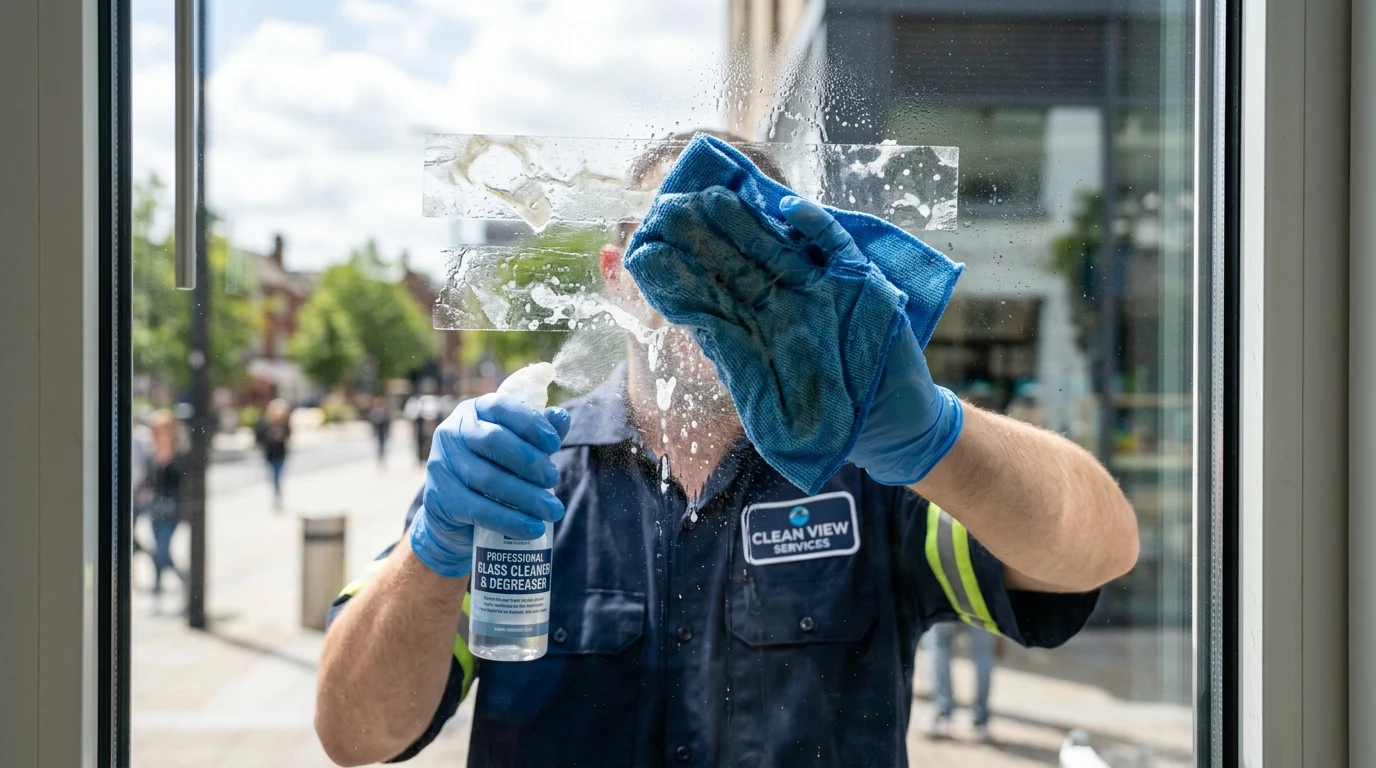
- Solvent Dwell Application: Pour a generous amount of mineral spirits or methylated spirits onto a clean microfiber cloth or cotton pad. Press the saturated pad firmly against the sticky adhesive for 60 to 90 seconds. The solvent will penetrate the polymer chains and soften the cross-linked adhesive bond.
- Controlled Angle Scraping: Hold the single-edge razor blade at a shallow 30-degree angle against the lubricated glass surface. Push forward with smooth, even strokes. Never pull the blade backward or scrape dry glass. The softened adhesive will peel cleanly off the pane in ribbons.
- Secondary Solvent Wipe: Dampen a clean section of the microfiber cloth with methylated spirits and wipe over the area to dissolve any remaining microscopic adhesive haze.
- Final Streak-Free Polish: Finish with an ammonia-free glass cleaner or a 50/50 distilled water and white vinegar spray, buffing with a dry waffle-weave microfiber towel for flawless optical clarity.
Specialized Challenges: Baked Stickers & Tinted Glass
1. Removing Baked-On Decals from Sun-Exposed Glass
When stickers remain on south-facing windows for years, the vinyl backing becomes brittle while the glue turns into a hardened amber glaze:
- Thermal Softening: Use a handheld heat gun or hair dryer on medium heat, holding it 4–6 inches from the glass for 30–45 seconds. This softens the vinyl matrix.
- Peel & Soak: Lift the vinyl corner with a plastic scraper, then immediately saturate the underlying glue with mineral spirits.
- Thermal Shock Warning: Never apply concentrated heat to freezing cold window glass in winter, as uneven expansion can cause thermal stress cracks.
2. Tinted Film Safe Glue Extraction
Aftermarket window tints utilize polyester films with delicate scratch-resistant coatings:
- Solvent Selection: Avoid mineral spirits, acetone, and lacquer thinners on tinted surfaces. Use only 99% isopropyl alcohol or mild baby shampoo solutions.
- Non-Metallic Scraping: Use a rigid Delrin or nylon scraper with rounded edges to prevent gouging the tint film.
Protecting Window Frames & Rubber Seals
🛡️ Architectural Frame Protection Measures
Solvents that are completely safe on glass can cause severe cosmetic and structural damage to surrounding window assemblies:
- uPVC & Vinyl Frames: Solvents like acetone will instantly melt and disfigure vinyl window frames. Always use mineral spirits or methylated spirits applied strictly via cloth—never spray solvents directly onto the window.
- EPDM Rubber Gaskets: Prolonged exposure to petroleum-based mineral spirits can cause rubber weather seals to swell, soften, and lose elasticity. Immediately wipe away accidental solvent drips from rubber edges.
- Stained & Varnished Wood: Denatured alcohol will dissolve shellac and soften polyurethane wood finishes. Mask wooden sills with painter’s tape and plastic sheeting before solvent application.
Frequently Asked Questions (FAQ)
Will mineral spirits damage window glass?
No. Standard architectural window glass is completely non-porous and chemically inert to mineral spirits. Mineral spirits will safely dissolve adhesive bonds without etching or scratching clear glass.
Is methylated spirits better than isopropyl alcohol for removing glue?
Methylated spirits (denatured ethanol) generally has stronger solvent power on heavy synthetic adhesives and resinous tree sap than standard 70% isopropyl alcohol, while still evaporating quickly and cleanly without leaving an oily film.
Can I use a razor blade on tempered glass?
Caution is advised. Poor quality tempered glass can have microscopic fabricating debris on its surface that a razor blade can drag, causing fine scratches. Always lubricate the glass with solvent or soapy water, hold the razor at a shallow 30-degree angle, and test a small discrete corner first.
How do you get rid of the oily film left by mineral spirits?
Mineral spirits naturally leaves a light hydrocarbon film. Simply follow up with methylated spirits, isopropyl alcohol, or a standard ammonia-free glass cleaner to wipe away the oily residue and restore crystal clarity.
Get our latest guides, news, and insights highlighted in your Google Search & AI Overviews.